British Wool:
Why I Work With It, and Why It Matters
By Jo Storie
British wool has been at the heart of my work for years – not just because of its heritage or sustainability credentials, but because of its creative potential and place-based value. As a knitwear designer, consultant, and founder of BareFaced Knits, I’ve spent my career championing natural fibres, and British wool in particular. Today, I work across the industry to help brands, makers, and manufacturers rediscover the diversity and brilliance of homegrown wool.
It’s easy to forget that the UK has one of the most varied wool clips in the world – over 60 recognised breeds, each with their own properties and stories. Some wools are lofty and fine, perfect for next-to-skin layers. Others are rugged and durable – ideal for socks, bags, and outerwear. British wool isn’t one fibre – it’s a whole palette. And I believe we need to understand that palette better if we want to make more thoughtful, functional, and beautiful textiles.
How I Work: From Studio to Flock
My B2B consultancy, Jo Storie Knit Design Consultancy, supports both emerging and established brands in embedding British wool into their design and production pipelines. I’ve worked with Arthur Beale to bring British wool back into a heritage maritime brand, collaborated with Glencroft on breed-specific developments, and supported the innovation-led team at Merrick Scotland to explore local sourcing and minimal-waste design using Scottish Blackface fleece from an UNESCO heritage site – a journey recently featured on BBC’s The One Show.
I also worked with the Tynemouth Volunteer Life Brigade (TVLB), a historic coastal rescue charity, to recreate their original 1864 working gansey – using only British wool and UK-based manufacturing. The project was recently highlighted in Living North magazine, and stands as a beautiful example of reviving traditional design with modern ethics and local resources.
With FLOC, I helped develop an accessories range grounded in regenerative agriculture. I’ve worked directly with Laxtons spinning to develop swatch collections showcasing their traceable British yarns, and collaborated with the British Wool Board to co-create a comprehensive swatch reference library – helping designers and developers better match wool properties with purpose.
BareFaced & Wool Britannia:
Accessible, Ethical, British
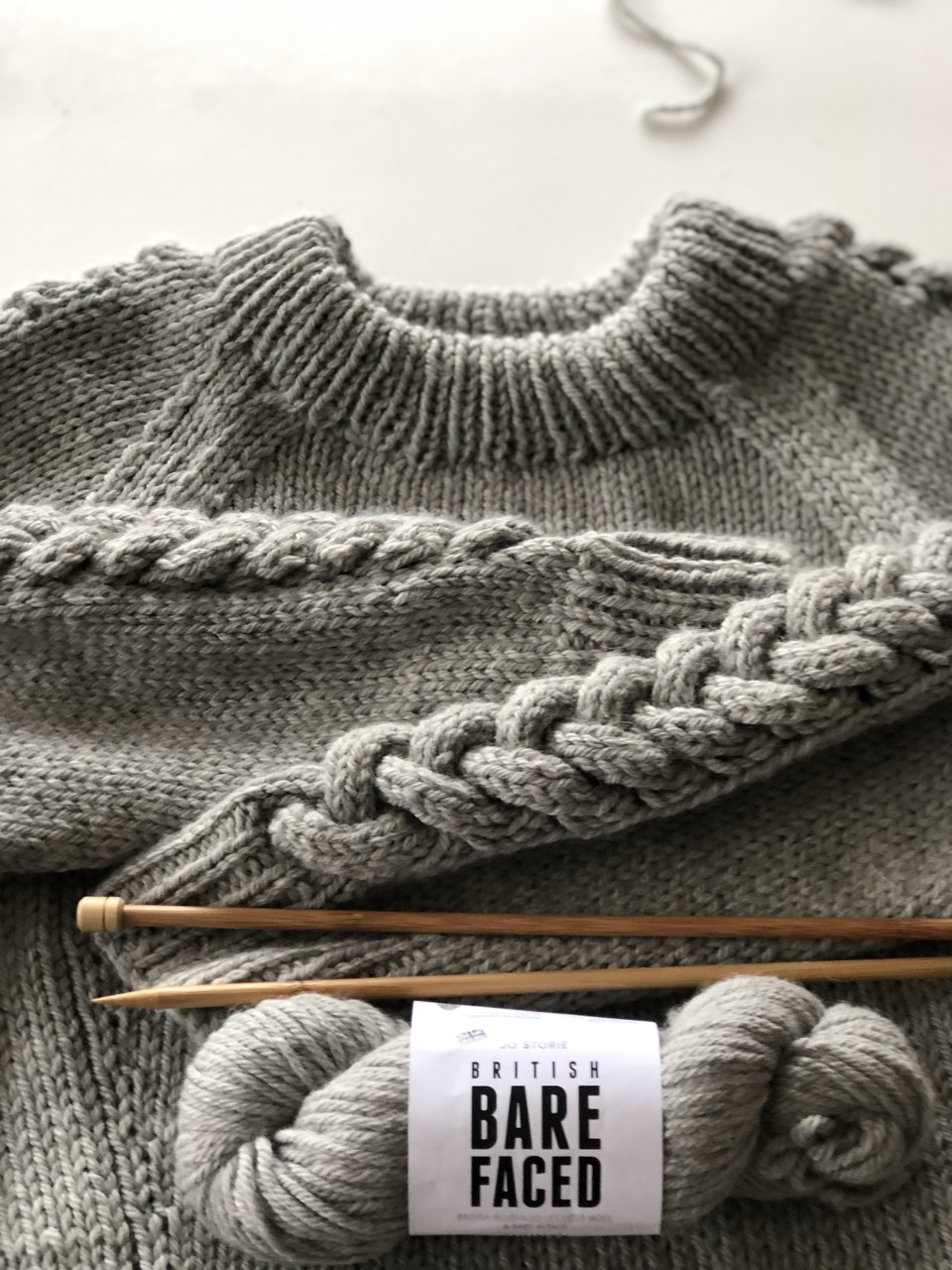
While my consultancy helps brands and manufacturers reimagine British wool at scale, my own label – BareFaced Knits – is about putting that story in the hands of makers. We offer knitting kits, patterns, and ready-made accessories that encourage slower making and more conscious material choices.
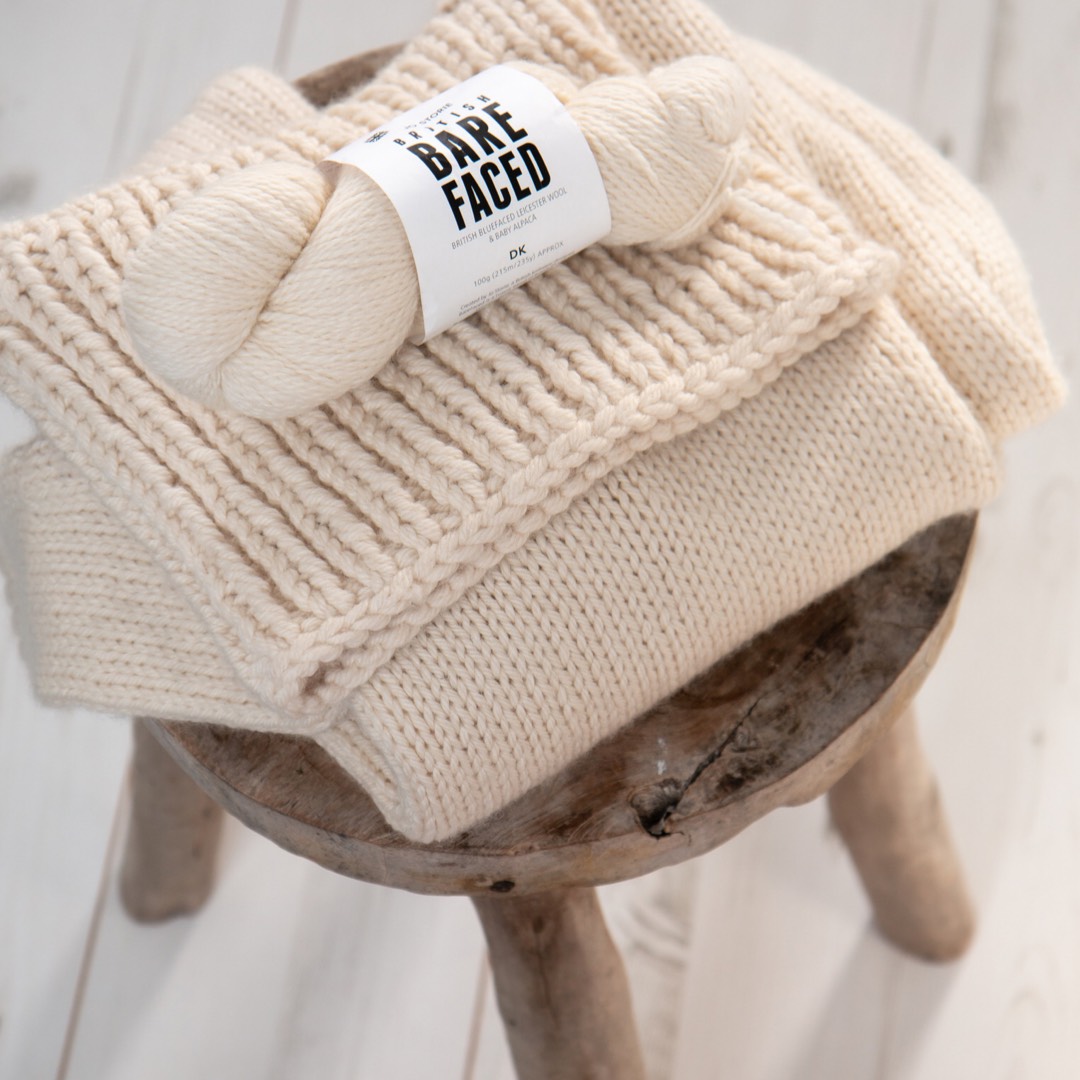
A cornerstone of the range is BareFaced British, a Crook Certified yarn made from 80% Bluefaced Leicester (BFL) and 20% British baby alpaca. It’s entirely sourced from British farms and spun in Yorkshire. I developed this blend to ease knitters into the feel of British wool – it’s soft, lustrous, and luxurious without losing the authenticity of a natural British fibre.
More recently, I launched Wool Britannia – a bold, unisex accessories line that’s playful on the surface but deeply principled underneath. It’s made entirely in Britain from 100% British wool, and designed to provoke a conversation.
The message is clear: this is not just any wool… this is British wool.
A Call to Makers and Brands
My message is simple: we don’t need to reinvent the wheel – we just need to look closer at what we already have. British wool is versatile, renewable, and underused. From soft BFL to robust Scottish Blackface, there’s a fibre for every project – if you take the time to understand it.
Designing with British wool isn’t about nostalgia. It’s about designing for purpose. For me, it’s about asking questions – who grew this fibre? Where did it come from? And how do I make something that respects the work, the land, and the animal behind it?
As an industry, and as individual makers, we have the chance to make better choices. Choices that are closer to home, more circular, and more connected. British wool has a place in our future – and I’ll keep working to make sure it’s recognised.